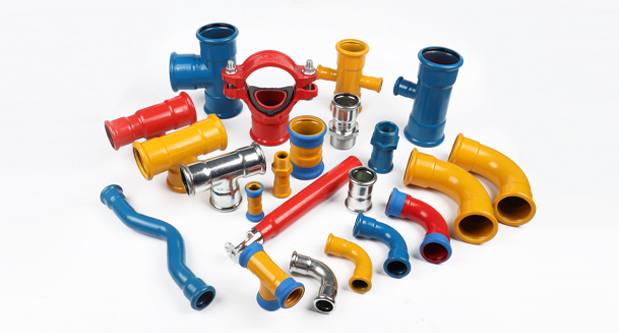
A qualified OEM press fittings manufacturer should provide more than standard pipe fittings. It should support material selection, product range planning, certification documentation, private label packaging, technical files, quality testing, and long-term supply.
Below are the key factors global buyers should evaluate before choosing a Chinese press fittings factory for OEM and private label projects.
Check for a Complete Press Fitting & Piping System
A reliable press fittings manufacturer should offer a complete piping system instead of a few scattered products. For OEM and private label buyers, product range directly affects how easily you can build a complete catalog for your local market.
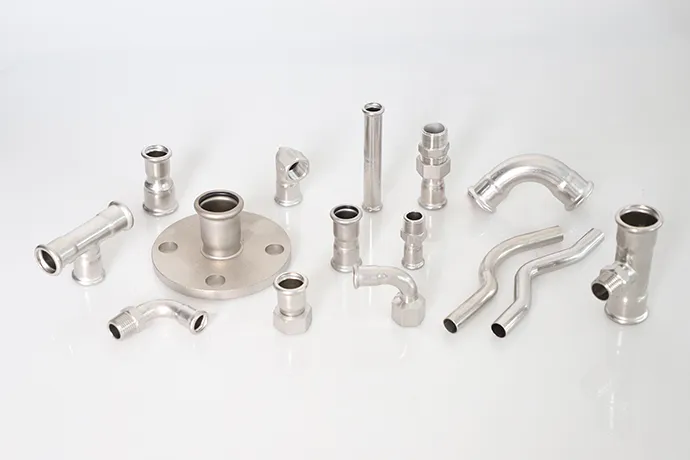
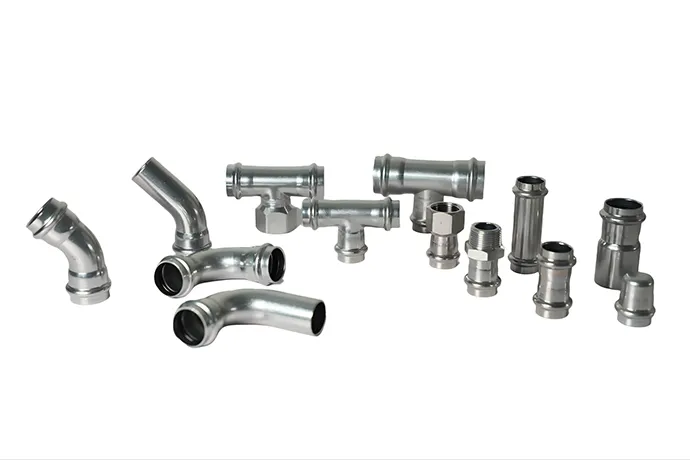
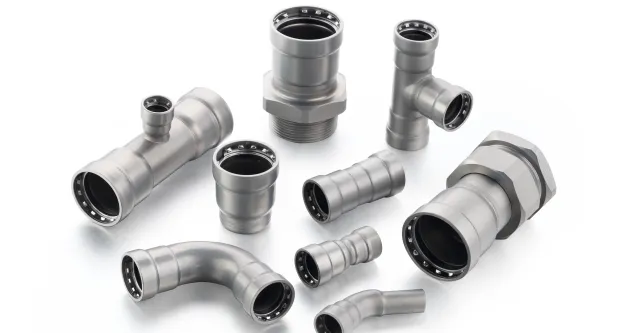
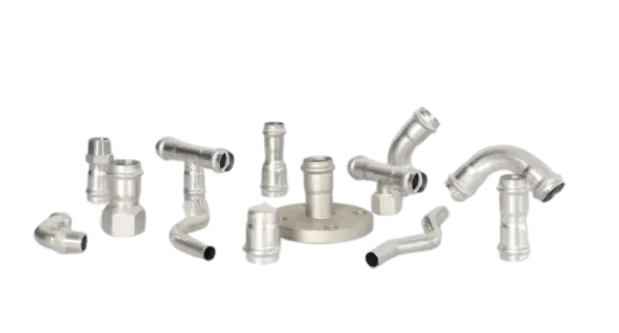
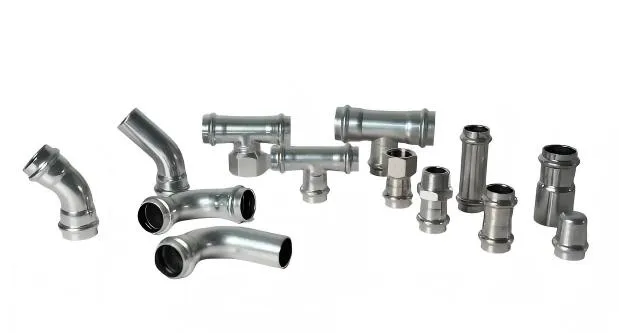
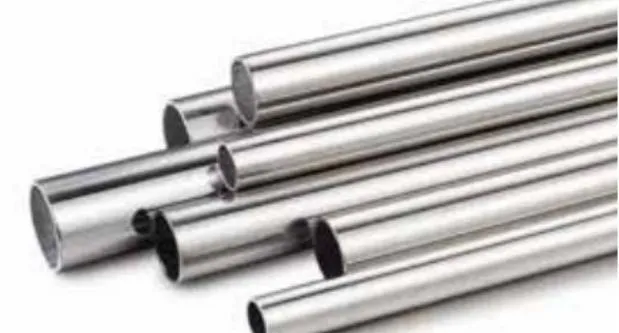
Key product categories to check include stainless steel press fittings, carbon steel press fittings, thick-walled press fittings, coated carbon steel press fittings, galvanized or zinc plated carbon steel press fittings, stainless steel pipes, and carbon steel pipes. A broader product range allows distributors to serve multiple applications with fewer sourcing channels.
As trusted press fittings manufacturers in China, IPC specializes in stainless steel & carbon steel press fittings and piping systems. We own our production facility, boast rich manufacturing experience, full in-house quality control and globally recognized certifications. Beyond reliable production, we help worldwide buyers cut supply chain risks, boost installation safety & stability, and build fully compliant, long-term stable product lines for your brand.
Evaluate Materials, Standards, and Application Fit
Product material is one of the most important factors in press fitting selection. Stainless steel and carbon steel fittings serve different applications, so a reliable manufacturer should clearly explain material grades, standards, pressure performance, temperature range, surface treatment, coating, and suitable applications.
For stainless steel systems, IPC’s Inox Press Fittings are described as 304/316L press fittings, available from DN10 to DN300, using POSCO steel. The listed standards include EN10312/JIS, and the fittings are positioned for water and gas systems, with M/V profile and groove connections available.
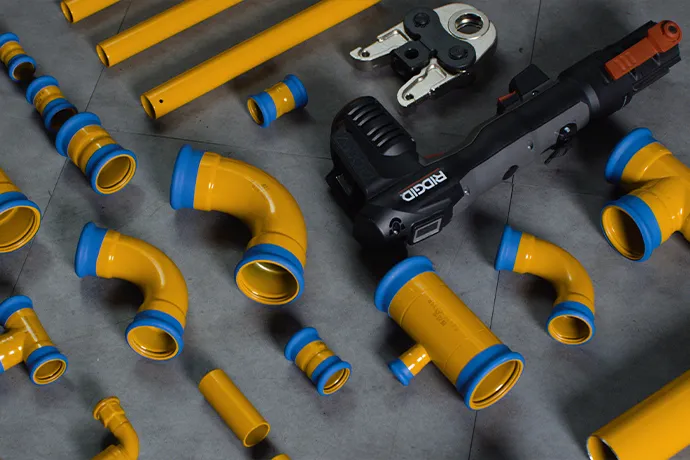
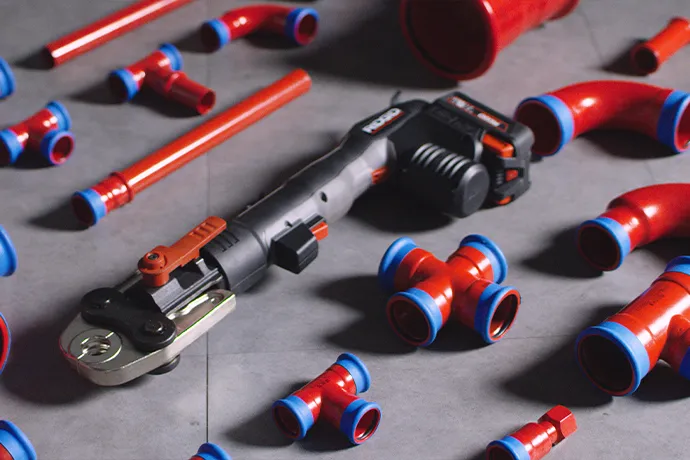
For heavy-duty or demanding applications, IPC’s Thick-Walled Press Fittings are available in stainless steel and carbon steel. The homepage lists 14MPa pressure capacity, 19.5KN tensile strength, and 1000h/800h salt spray proof performance, with applications including gas, firefighting, marine, and industrial pipelines.
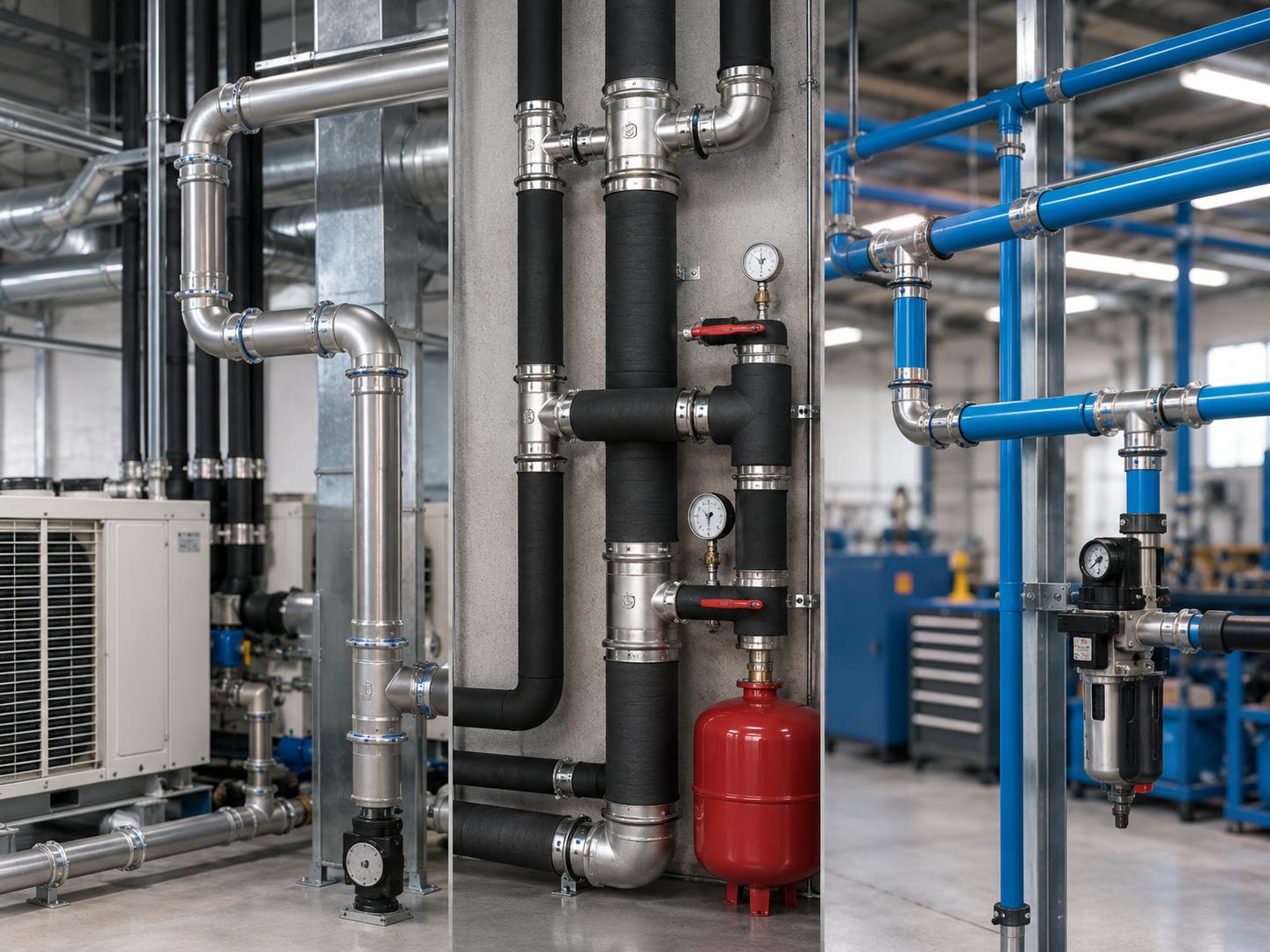
For HVAC, heating, and compressed air applications, IPC’s Zinc Plated Carbon Steel Press Fitting is described as EN10305 compliant and QB(CSTB) certified for heating and compressed air at PN16. It withstands -35°C to 93°C and features 7-15μm zinc plating plus passivation, with 96h salt spray test corrosion-free performance.
Confirm OEM, ODM, and Private Label Support
For brand owners and distributors, OEM capability is not only about manufacturing products. It includes product customization, logo marking, label design, carton design, product documentation, batch control, and long-term product range planning.
A strong OEM press fittings manufacturer should support:
Custom logo marking
Private label packaging
Carton and label customization
Product range planning
Sample development
Technical file support
Batch inspection
Long-term supply programs
If you are building a private label press fittings brand, ask whether the supplier can help you create a complete product family for different applications, such as potable water, HVAC, fire protection, gas, and compressed air. This is more valuable than simply purchasing individual fittings.
Review Certifications and Market Compliance
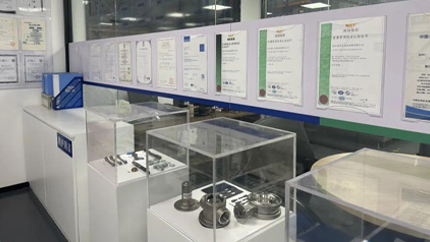
As an industrial manufacturer with over 20 years of experience, we know that certifications are the ultimate baseline for engineering safety. When pipeline systems handle high pressure or hazardous fluids, any micro-leakage or material non-compliance poses immense risks to a distributor's brand reputation. Therefore, global procurement managers must verify that a supplier's documentation precisely covers their target market and application:
Potable Water Systems: Material hygiene is critical. Our 304/316L stainless steel press fittings utilize premium raw steel from POSCO and are fully backed by DVGW, WRAS, CSTB, GDV, cUPC, NSF, and ACS, ensuring zero chemical leaching into drinking water.
HVAC & Heating Lines: Closed-loop networks require long-term thermal stability. Our carbon steel press fitting series holds the European CSTB (QB) certification, proving its 7–15$\mu$m zinc-plating passivation layer withstands harsh heating variables.
Fire Sprinkler & Industrial Gas: Heavy-duty applications require absolute structural integrity. IPC’s thick-walled press systems carry FM Approvals and UL/cUL standards for fire protection, alongside specialized HNBR (yellow) and FKM (green) seal rings for airtight gas and compressed air pipeline compliance.
Compare Low-Cost Suppliers and Reliable OEM Manufacturers
| Evaluation Factor | Low-Cost Supplier | Reliable OEM Press Fittings Manufacturer |
| Product Range | Limited or inconsistent | Complete stainless steel and carbon steel systems |
| Certification | Unclear or incomplete | Provides relevant certification documents |
| Material Control | Basic or undocumented | Clear material grade and standard information |
| Testing Capability | Limited testing | Material, pressure, leakage, corrosion, and lifecycle testing |
| OEM Support | Simple packaging only | Logo, carton, label, product range, and technical file support |
| Supply Stability | Uncertain lead time | Stable production capacity and repeat order support |
| Application Support | Generic product selling | Water, gas, HVAC, fire protection, and compressed air selection support |
For long-term private label success, the better choice is usually not the cheapest supplier, but the manufacturer that can support your product line, market compliance, technical documentation, quality consistency, and supply continuity.
Key Factors to Consider Before You Choose a Supplier
Verify certifications before bulk orders
Request valid certificates and confirm whether they apply to the exact product series, material, size range, and application.Check material quality and testing standards
Make sure the supplier can provide clear material grades, inspection processes, and testing support for pressure, leakage, corrosion, and durability.Choose suppliers with stable delivery capability
For distributors and private label brands, stable lead time and repeat supply are essential to avoid stock shortages and delayed projects.Look beyond the lowest price
Low prices may lead to hidden costs such as quality issues, shipment delays, missing documents, after-sales problems, or brand damage.Evaluate communication and technical support
Fast, clear, and professional communication often reflects how well the supplier can handle OEM details, packaging requirements, certification questions, and project changes.
A strong OEM press fittings supplier should help buyers reduce sourcing risk, protect brand reputation, and build a reliable long-term supply chain.
Industry Trends and Insights
The global press fittings market is moving toward higher performance, cleaner installation, and more transparent sourcing. Buyers are no longer focused only on unit price; they are paying closer attention to certified materials, corrosion resistance, hygienic piping requirements, and long-term system reliability.
At the same time, OEM and private label buyers increasingly prefer manufacturers that can provide complete piping system support rather than isolated fittings. Sustainability, digital production management, testing capability, and supply chain traceability are also becoming important indicators of supplier competitiveness.
For global distributors and brand owners, choosing a press fittings manufacturer with certified quality, OEM/ODM flexibility, application support, and stable delivery is becoming essential for long-term market growth.
Conclusion
Choosing a reliable press fittings manufacturer in China for OEM and private label projects requires a full evaluation of product range, materials, certifications, manufacturing capability, testing standards, application support, and customization service.
For global distributors, plumbing wholesalers, HVAC suppliers, fire protection suppliers, importers, and private label brands, a strong partner should provide more than products. It should help build a complete, market-ready press fitting system backed by stable manufacturing and quality control.
If you are looking for stainless steel or carbon steel press fittings for OEM, ODM, or private label programs, IPC can support your sourcing needs with certified press fitting solutions for water supply, HVAC, gas, fire protection, compressed air, and industrial piping applications.
FAQ
Q1: What should I check first when choosing a press fittings manufacturer in China?
Start by checking whether the manufacturer has a complete product range, real manufacturing capability, relevant certifications, testing facilities, and OEM/private label support.
Q2: Why are certifications important for press fittings?
Certifications help confirm whether the fittings meet safety, quality, and application requirements in specific markets, especially for potable water, gas, fire protection, HVAC, and compressed air systems.
Q3: Can a press fittings manufacturer support private label projects?
Yes. A qualified OEM manufacturer can support private label projects through logo marking, packaging customization, carton design, technical files, product range planning, and repeat supply.
Q4: What is the difference between stainless steel and carbon steel press fittings?
Stainless steel press fittings are commonly used for water, gas, plumbing, and corrosion-sensitive applications, while carbon steel press fittings are often used for HVAC, heating, compressed air, and industrial piping systems.
Q5: Why is laboratory testing important for OEM press fittings?
Laboratory testing helps verify material quality, dimensional accuracy, sealing performance, pressure resistance, corrosion resistance, and long-term durability before products enter the market.
Q6: What information should buyers provide when requesting an OEM quotation?
Buyers should provide target market, product type, material, size range, profile type, application, certification requirements, packaging needs, estimated annual quantity, and private label requirements.