Apr 17, 2025
Blog

Press fittings are widely used in modern piping systems because they allow fast, flame-free and reliable connections without welding or threading. However, when buyers compare press fitting systems, one question often appears first: what is the difference between M-profile and V-profile press fittings?
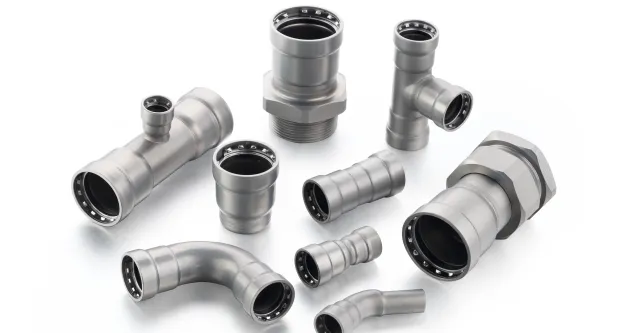
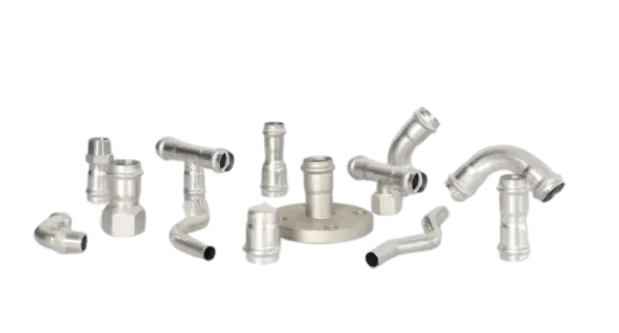
In short, M-profile and V-profile press fittings are different press contour systems. They use different jaw geometries, sealing deformation zones, and installation requirements. Neither profile is universally better. Understanding their differences helps engineers, contractors, distributors, and OEM partners select the optimal solution for water supply, heating, compressed air, fire protection, and more.
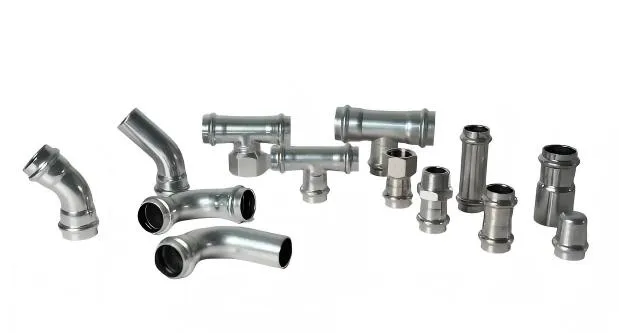
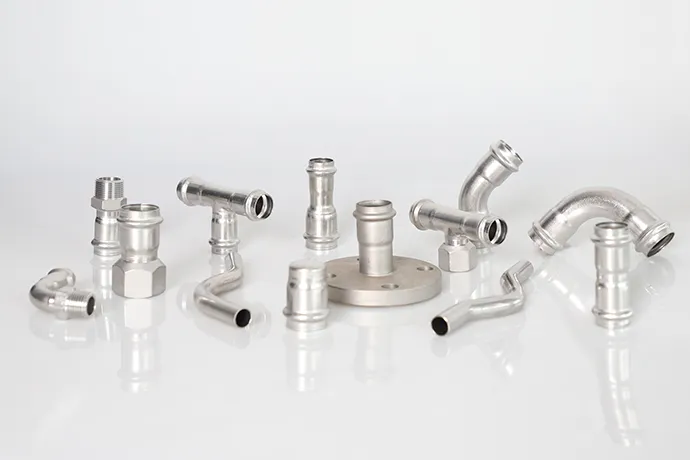
For OEM buyers, distributors, and engineering contractors, the decision should also consider material selection. At IPC, both M-profile press fittings and V-profile press fittings are available in carbon steel and inox stainless steel options, giving buyers flexibility for heating, compressed air, water supply, HVAC, firefighting, and other piping applications.
Both profiles achieve similar pressure ratings (often up to 16 bar or higher in thick-walled variants) and temperature ranges (e.g., -35°C to 93°C or up to 110°C short-term for EPDM), meeting standards like DVGW, WRAS, and others. Performance equivalence is high, but nuances exist:
M-Profile excels in applications needing strong resistance to pull-out forces, making it suitable for industrial, high-pressure, or vibration-prone systems. Its design is widely compatible with universal press tools in many markets.
V-Profile offers excellent vibration resistance and seal protection due to the extended contour, often preferred for heating, potable water, and general plumbing where clean insertion and long-term durability are priorities.
Both M-profile and V-profile press fittings rely on the same basic principle: the pipe is inserted into the fitting, the press tool applies mechanical force, and the O-ring is compressed to form a sealed connection. The key difference lies in how the press jaw contour deforms the fitting body around the pipe and sealing area.
In an M-profile system, the jaw contour is designed to press around the fitting bead and nearby pipe area. This creates a mechanical lock while compressing the O-ring inside the sealing chamber. In a V-profile system, the press contour usually creates a different deformation shape around the socket area, often emphasizing compression before and after the sealing zone.
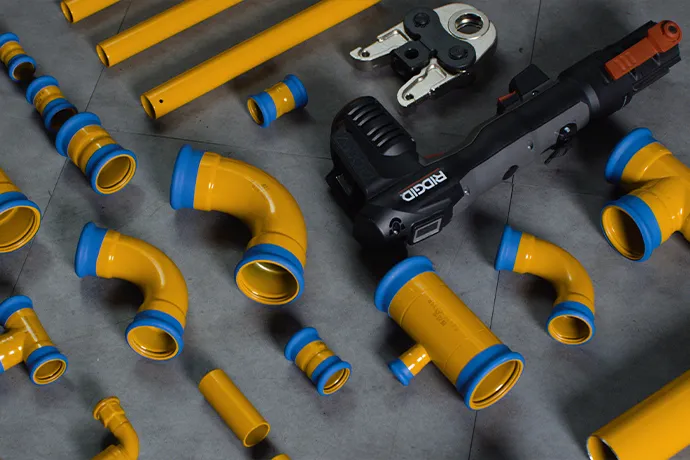
Because of these differences, M-profile fittings must be installed with M-profile jaws or collars, while V-profile fittings must be installed with V-profile jaws or collars. Using the wrong jaw profile can cause incomplete pressing, poor sealing, or abnormal fitting deformation.
| Comparison Point | M-Profile Press Fittings | V-Profile Press Fittings |
| Press contour | M-shaped jaw contour around the fitting bead and pipe area | V-shaped jaw contour around the fitting socket and sealing area |
| Sealing principle | O-ring compression plus mechanical deformation | O-ring compression plus mechanical deformation |
| Tool requirement | Requires M-profile jaws or collars | Requires V-profile jaws or collars |
| Installation focus | Correct insertion depth, deburring and M-jaw alignment | Correct insertion depth, deburring and V-jaw alignment |
| Common O-ring options | EPDM; FKM may be used for special applications depending on specification | EPDM; FKM may be used for special applications depending on specification |
| Selection logic | Choose when project standard, market habit or tools require M profile | Choose when project standard, market habit or tools require V profile |
After selecting the profile, buyers also need to choose the correct material. This is where carbon steel and inox stainless steel press fittings differ.
Carbon steel press fittings are often used in closed heating systems, compressed air transportation, and industrial piping systems where corrosion conditions are controlled. They usually require surface protection such as zinc plating, passivation, or coating to improve corrosion resistance.
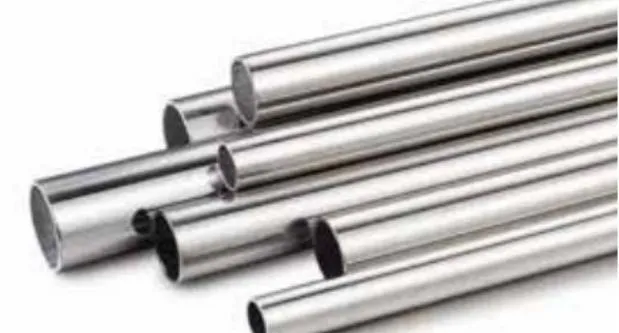
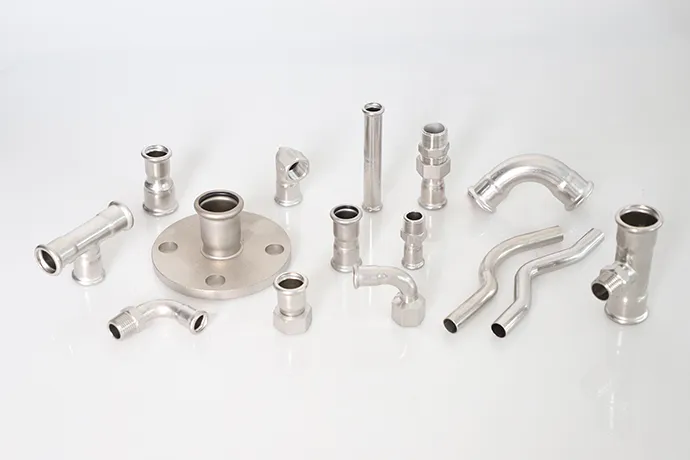
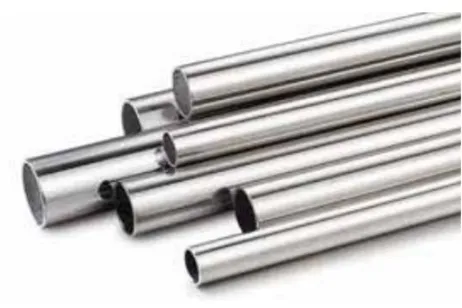
Inox press fittings, made from stainless steel such as 304 or 316L, are more suitable for applications requiring higher corrosion resistance, hygiene performance, or water system compatibility. They are commonly selected for water supply, HVAC, potable water, compressed air, and other systems where stainless steel offers long-term durability.
In simple terms, profile decides the pressing geometry, while material decides the application environment. A buyer should not choose M or V profile alone without confirming whether the system requires carbon steel or inox stainless steel.
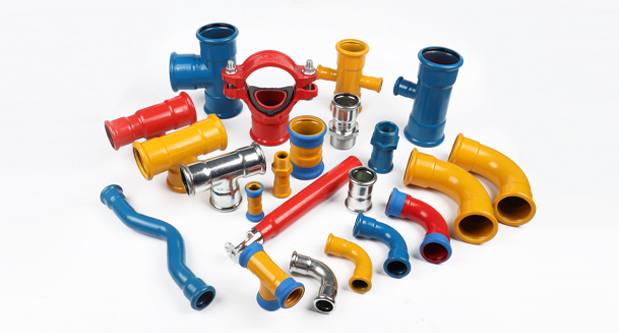
As a leading manufacturer, IPC offers both Carbon Steel and Stainless Steel Press Fittings in M-Profile and V-Profile configurations, backed by rigorous testing and international certifications.
| IPC Product Option | Profile | Material | Main Application |
| Carbon Steel M Profile Press Fittings | M profile | Zinc plated carbon steel | Closed heating, compressed air, firefighting |
| Inox M Profile Press Fittings | M profile | 304/316L stainless steel | Water supply, compressed air, heating |
| Carbon Steel V Profile Press Fittings | V profile | Carbon steel | Heating water systems |
| Inox V Profile Press Fittings | V profile | Stainless steel | Potable water, HVAC, compressed air, firefighting |
Assess System Requirements: Pressure, temperature, media (potable, gas, air), vibration, and pipe material.
Tool Compatibility: Ensure your press tools have the correct jaws for M or V.
Regional Standards & Approvals: Verify certifications (DVGW, WRAS, NSF, etc.) for your market.
Project Scale & Preferences: Larger or industrial projects may favor M for grip; standard plumbing often suits V.
Supplier Reliability: Choose press fittings manufacturers like IPC with in-house labs, full traceability, and proven OEM experience.
Cut pipe square, deburr, and clean thoroughly.
Insert pipe fully (check depth marks or indicators).
Position jaws correctly and complete the press cycle.
Visually confirm the crimp and absence of leaks (unpressed fittings will leak visibly due to IPC’s O-ring design).
Follow manufacturer guidelines for pipe compatibility and torque.
Proper installation ensures decades of leak-free service.
M-Profile and V-Profile press fittings both deliver reliable, efficient connections, with differences primarily in contour geometry, O-ring seating, and mechanical emphasis. M-Profile offers robust pull-out resistance, while V-Profile provides excellent seal protection and grip stability. The best choice depends on your specific application, tooling, and system demands.
IPC Piping System Co., Ltd. supports your projects with high-quality Carbon Steel and Inox Press Fittings in both profiles, manufactured under ISO 9001/14001 and multiple international approvals. Whether for OEM, private label, or direct supply, our solutions combine performance, compliance, and value.
Contact IPC today for technical support, samples, or a tailored quotation to optimize your next piping project.
No. M-profile and V-profile press fittings require matching jaws or collars. The fitting profile and press jaw profile must follow the manufacturer’s installation instructions.
Neither is universally better. M-profile and V-profile systems can both provide reliable connections when correctly designed, tested, and installed. The right choice depends on the project specification, tool availability, pipe material, and application.
In some cases, the same press machine may accept different jaw sets. However, the jaw or collar must match the fitting profile. M-profile fittings require M-profile jaws, while V-profile fittings require V-profile jaws.
Choose carbon steel press fittings for closed heating, compressed air, or industrial systems where carbon steel is suitable and surface protection is required. Choose inox stainless steel press fittings for applications requiring better corrosion resistance, water supply compatibility, or stainless steel system performance.